
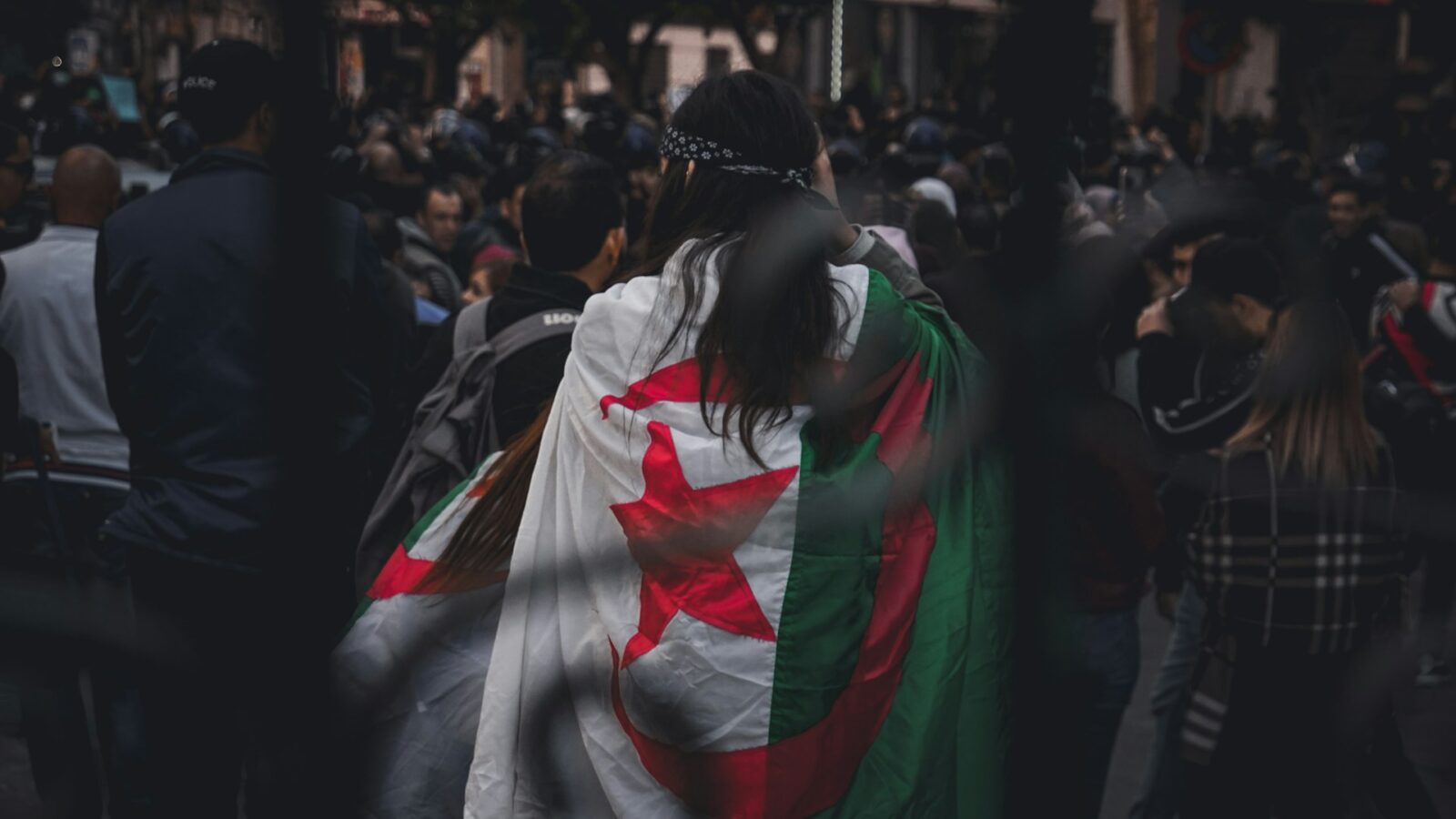

On 24 December 2025, the Algerian parliament voted unanimously to adopt a law recognising French colonisation as a state crime. For many Algerians, this law constitutes both an affirmation of their national dignity and a step toward acknowledging Algeria’s collective memory.
The law comprises 27 Articles that mandate official apologies and reparations and enumerates explicitly multiple forms of colonial crimes committed by the French state, including: the massacres of civilians, military attacks against populations, nuclear tests and explosions (notably 17 tests in the Sahara between 1960 and 1966), extrajudicial executions, mass physical and psychological torture, the use of unconventional and internationally prohibited weapons, the laying of mines, the plundering of public funds and resources, forced deportations and population displacements, racial discrimination, inhumane treatment, and the imposition of exceptional laws on Algerians. Such exceptional laws were primarily embodied by the Indigenous Code, decreed on June 28, 1881. This code established a separate legal regime for Muslim Algerians, depriving them of the rights accorded to French citizens.
The law adopted on 24th December 2025 seeks a formal apology from France, compensation for material and moral damages, the return of national archives, the provision of detailed maps of nuclear test sites, decontamination of areas affected by atomic tests, and the repatriation of the remains of Algerian resistance fighters held in France. The law also enshrines criminal provisions that apply to Algerian citizens and specify penalties criminalising excuses to colonisation, glorification, or justification of colonialism. The law even addresses the sensitive issue of the Harkis (Algerian auxiliaries of the French army).
Colonisation and systemic recognition
Colonisation is not recognised as a crime against humanity, primarily because its definition is not applied retroactively (nullum crimen sine lege). The notion of ‘crime against humanity’ was defined in the 20th century, during important developments such as the 1899 Martens Clause in the Hague Convention: Andrei Mandelstam’s argument after World War I, that the Armenian Genocide was a crime against humanity, supported by Louis de Brouckère at the League of Nations: the work of Hersch Lauterpacht and Raphael Lemkin during the London Agreements, which led to the Nuremberg trials in 1945 and subsequently, the definition of crimes against humanity as acts that harm civilian populations, such as murder, extermination, enslavement, or deportation. Therefore, crimes against humanity did not exist as a legal category before 1945.
France adopts a piecemeal approach by recognising isolated incidents rather than the systemic nature of colonisation in Algeria. For instance, France has made acknowledgements about specific events such as the Sétif massacres of 1945 and the Paris Massacre of 1961, where peaceful Algerian protesters were brutally suppressed. This highlights a pattern in which only single episodes are confronted, rather than the entire colonial system and its rules. For colonisation to be recognised as a crime against humanity, it would need to be conceptualised as a continuous phenomenon rather than a series of isolated events. However, the plurality of colonial histories also complicates the question of whether colonisation constitutes a crime against humanity. But colonial regimes consist of serious violations that are organised, repeated, and carried out by a political, economic, or social system. This systemic approach has a precedent: South African apartheid was once acknowledged as a domestic policy, then condemned politically and morally, and finally recognised as a crime against humanity. The example of apartheid shows that a system can later be seen as criminal because of its oppressive and discriminatory nature. Furthermore, the consequences of colonisation are socially, economically and psychologically inter-generational: they still shape the present through ongoing inequalities, economic dependence, social divisions, and trauma passed down through generations. This demonstrates that colonisation was a systemic violation of rights and supports the view that recognition should address current issues of justice, memory, and international responsibility.
While it may not have immediate legal ramifications, the Algerian law’s symbolic significance is impactful; it breaks with decades of silence. For many African states, such recognition could demonstrate that a state can acknowledge colonial crimes without collapsing legally or institutionally. It also shows that it is possible to assume historical responsibility without immediately paving the way for massive legal reparations or a widespread legalisation of the colonial past.


0 Comments