
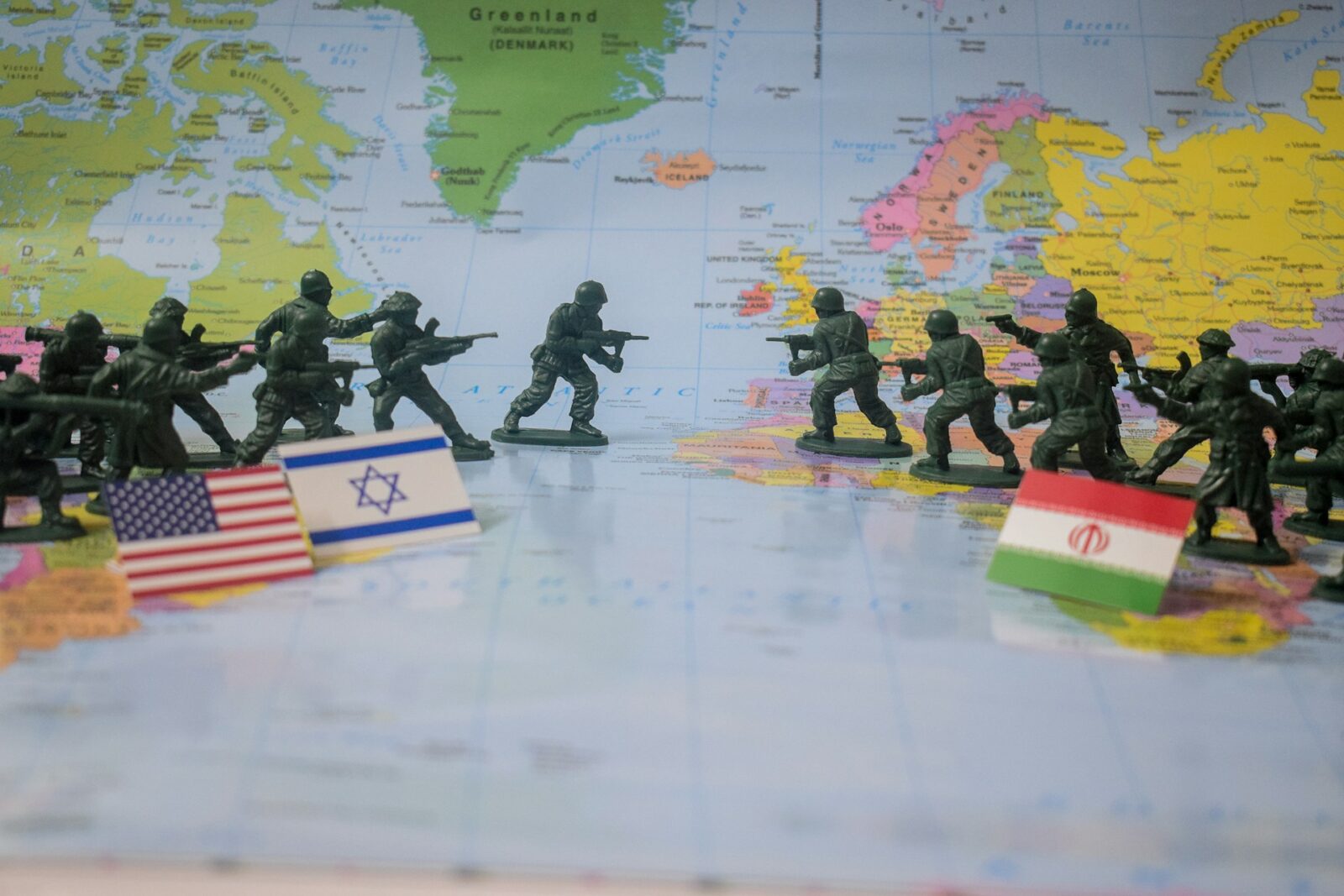

In February 2026, Iran-US-Israel conflict escalated into a full-scale armed confrontation after joint US-Israeli airstrikes were carried out as part of the so-called Operation Epic Fury, striking Iran’s leadership, command and control centers, nuclear reactors, and ballistic missiles launch sites spread over more than twenty provinces. The strikes reportedly resulted in deaths of the Supreme Leader Ayatollah Ali Khamenei and other high-ranking officials. Human losses are mounting, with more than 1,500-2,000 victims counted among civilians in Iran, including nearly all students at an elementary girls’ school hit during one US airstrike in Minab, leaving over 160 kids dead. The existing damage to Iran’s infrastructure, especially civilian facilities, is exacerbated by already imposed sanctions and internal persecution. The case demonstrates the ambiguity of jus ad bellum norms (the principles regulating the use of force) while illustrating strict limits placed on the Responsibility to Protect (R2P) concept whenever a powerful nation invokes security interests while human rights abuses are committed.
The Charter of the United Nations in Article 2(4) provides a clear prohibition against any threat or use of force against the territorial integrity or political independence of any state. Article 51 allows resort to force in defence “if an armed attack occurs” on its territory. The International Court of Justice clarified in the Nicaragua case that not every use of force rises to the level of an armed attack, although interpretive controversies over criteria for judging imminence, necessity, and proportionality remain numerous. In the Iran case, the US and Israel invoked Article 51 and argued that the airstrikes aimed to eliminate the Iranian threat posed by its nuclear program and missile capabilities, while over one hundred experts from international law societies (the American Society of International Law and International Law Association) maintain that there was no prior armed attack, and any pre-emptive actions would fail the strict imminence standard defined in the Caroline affair and other anticipatory defence cases. Without the authorization of the Security Council in accordance with Chapter VII of the Charter, the strikes would clearly violate the Charter prohibitions reiterated in its Preamble and Article 1.
This so-called ambiguity, more accurately understood as interpretive indeterminacy in the application of established jus ad bellum norms, directly infringes on human rights, notably the right to life, protected in Article 6 of the International Covenant on Civil and Political Rights. The UN Human Rights Committee explained in its General Comment No. 36 (paragraph 70) that any acts of aggression causing deprivation of lives violate this principle ipso facto since an unlawful resort to force makes killings of civilians arbitrary. Strikes in proximity to civilians, schools, and dual-use objects pose problems not only concerning jus in bello (law in war) but also regarding jus ad bellum (right to go to war).
The Three-Pillar Framework of R2P
The principle of R2P was formulated in Paragraphs 138–139 of the UN General Assembly Resolution adopted in 2005, aiming to provide an answer to atrocity events. The principle includes three pillars in which the first obligates states to protect their populations from mass atrocity crimes, namely genocides, war crimes, ethnic cleansing, and crimes against humanity. The second pillar involves international assistance rendered through peaceful means and capacity building. The third pillar permits the timely and decisive collective action, including the use of force, as an ultimate measure provided only under Chapter VII of the Charter and authorized by the UN Security Council. R2P was purposely formulated to prevent unilateral military interventions under the pretext of protection from mass atrocities while covering gaps left by the failures in Rwanda and Srebrenica. It creates no exceptions to Article 2(4). In a supposedly pre-emptive response, the US and Israel claimed to have acted almost exclusively from the perspective of Article 51, and 2025 Impact Report of Global Centre for the Responsibility to Protect rejected any notion of the R2P being used in justification of the attack.
The 2026 Iran conflict underscores how the Responsibility to Protect remains strictly limited by state sovereignty and UN Security Council veto politics, enabling powerful states to obstruct or selectively enforce intervention irrespective of humanitarian imperatives. Coupled with the interpretive flexibility of jus ad bellum, these structural limits risk eroding accountability and exacerbating civilian harm within the post-1945 international order. The example of the R2P in relation to Libya 2011 showed the dangers of expanding authorization for protection into regime changes, and Iran became another test for this doctrine.
The ambiguity of jus ad bellum principles in combination with the limitations of the R2P concept is detrimental to the post-1945 order as a whole since interpretive possibilities of powerful nations to reshape norms and increase accountability make civilians suffer and the post-conflict environment worse. In addition, in cases involving R2P, it becomes increasingly important to avoid misinterpretation and violation of the prohibition against aggression while addressing atrocity events.


0 Comments