Seeing What the Law Cannot: Open-Source Investigation as a Missing Tool in Modern Slavery Enforcement
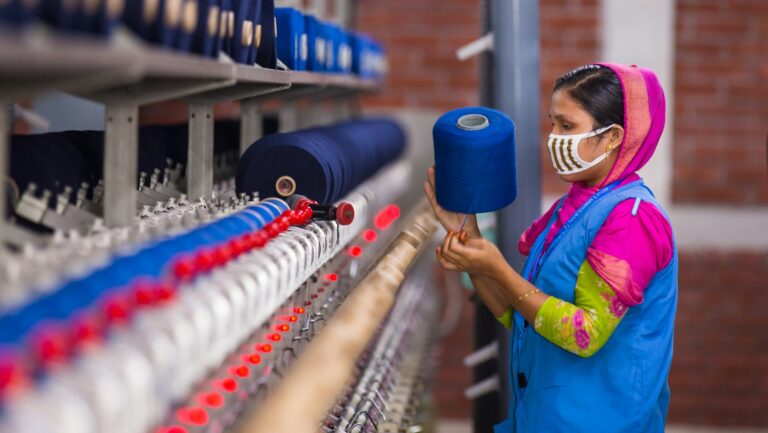
In 2023, migrant workers from Nepal and Bangladesh claimed they had been trafficked to Malaysia and forced to work making parts for the Dyson manufacturer. In Limbu v Dyson Technology...
Gender-Based Violence and the Struggle for Justice: Rohingya Women at the Intersection of Law and Displacement
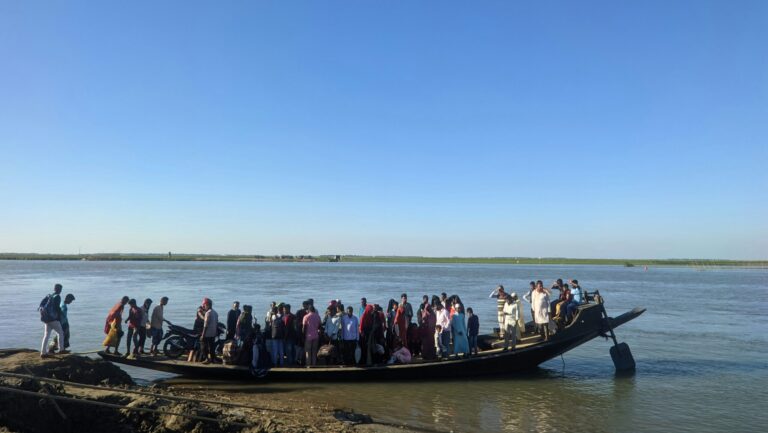
For Rohingya women in Cox’s Bazar, Bangladesh, the refugee camp is not simply a humanitarian space. It is a site where gender-based violence (GBV) is woven into the structures of...
A Renewed Push for Stringent Funding Restrictions on NGOs: India’s Foreign Contribution (Regulation) Amendment Bill, 2026
The Foreign Contribution (Regulation) Amendment Bill 2026, introduced in India’s Lok Sabha (House of the People), which is the part of the Lower House of the Legislature of the Union...
Constitutional Morality and the Future of Rights Jurisprudence in India
A nine-judge Bench of the Supreme Court of India is presently hearing a review petition against its judgment in Indian Young Lawyers Association v. State of Kerala, wherein the Court...
Amending Article 319 of Senegal’s 1965 Penal Code Violates the Human Right to Health
On 11th March 2026, Senegal passed a bill doubling the punishment enshrined in the queerphobic provision Article 319 of the 1965 Penal Code from a maximum imprisonment of five years...
Judging the Judge: India’s Curriculum Ban and Democratic Accountability
On February 26, 2026, India’s Supreme Court took suo motu cognizance of a grade 8 NCERT textbook chapter titled “Corruption in the Judiciary,” directing seizure of all circulating copies and...
The Lidho Judgment: Where Does Implementation Stand?
On 5 September 2023, the African Court on Human and Peoples’ Rights delivered its first-ever environmental ruling. In Ligue Ivorienne des droits de l’homme (LIDHO) and others v. Republic of...
Weaponized Legalism and the Promise-Performance Gap: Press Suppression in Transitional Democracies: Part 2 – Comparative Global South Perspectives
In Part 1, I examined how Bangladesh’s interim government weaponized legal frameworks to suppress the press; Part 2 broadens the lens to parallel patterns across the wider Global South and...
Weaponized Legalism and the Promise-Performance Gap: Press Suppression in Transitional Democracies: Part 1 – Bangladesh
This two-part blog examines how transitional governments in the Global South systematically suppress press freedom through “weaponized legalism”—the use of formally legal procedures to violate fundamental rights while maintaining constitutional...
Is There Any Scope to be an Approver under International Criminal Law?
‘Approver’ is a common phenomenon in many jurisdictions where domestic criminal law allows an individual who is believed to be implicated in a crime, whether directly or as an accomplice,...
The Indian Supreme Court’s Shifting Approach: Go to High Court
During the drafting of Indian Constitution, the father of the Indian Constitution, Dr B.R. Ambedkar, categorically said that Article 32 is the sole and heart of the Indian Constitution. It...
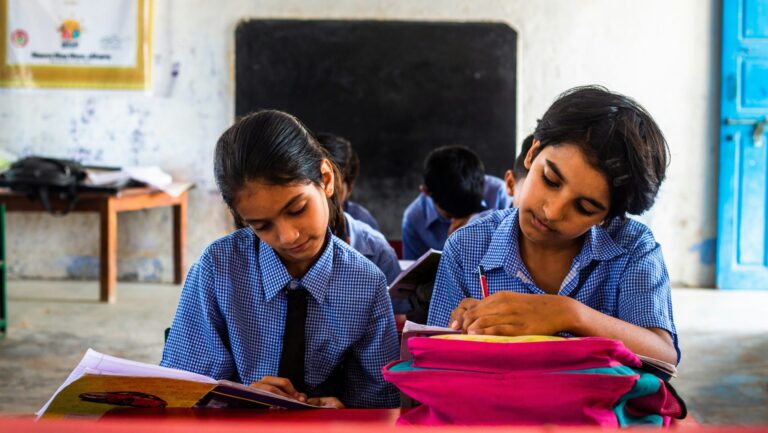
Transgender Rights in Employment after Jane Kaushik v. Union of India: A Socio-Legal Analysis of the Supreme Court’s Ruling
In October 2025, in Jane Kaushik v Union of India, the Indian Supreme Court confronted a form of exclusion that has become routine rather than exceptional. A transgender teacher was...