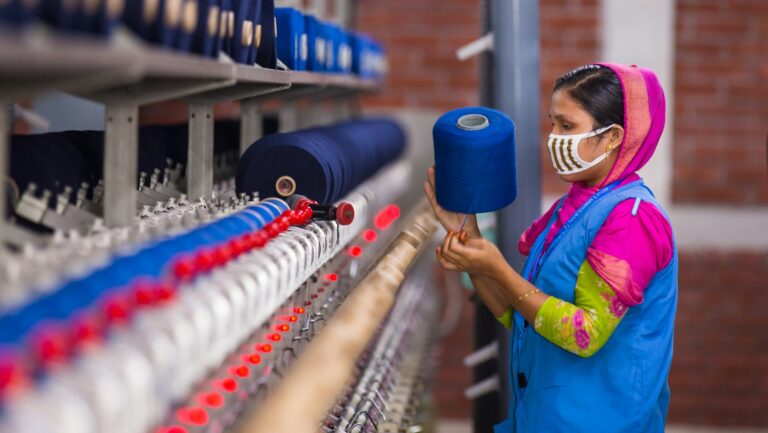
Seeing What the Law Cannot: Open-Source Investigation as a Missing Tool in Modern Slavery Enforcement
In 2023, migrant workers from Nepal and Bangladesh claimed they had been trafficked to Malaysia and forced to work making parts for the Dyson manufacturer. In Limbu v Dyson Technology...
Judicial Recognition and Quantification of Unpaid Domestic Labour in India – A Feminist Analysis
The Supreme Court of India in Shishu Pal @ Shish Ram & Ors v Surjeet & Ors, 2026 INSC 634 has provided a distinct framework for quantifying the unpaid care...
When Good Law Is Not Enough: Disability Employment in Uganda after the African Disability Protocol
In May 2024, the African Disability Protocol entered into force: the first continental treaty on the rights of Africans with disabilities. For a state such as Uganda, which has ratified...
Struggling to Breathe in the Appalachian Coal Mines: The “Exorbitant Cost” of Human Rights
Crystalline silica is an abundant mineral, serving as the basis of a 124 billion dollar market in 2024 alone. Coal miners in the United States Appalachian Region face a high...
Women and the Labour Market: Navigating Algorithm Decision Making
AI is reshaping the labour market, influencing operations across organisations, as Eurostat shows. The ILO has stated that women are more likely than men to be affected by automation. As...
Religious Autonomy and Genuine Occupational Requirements: The CJEU’s Judgment in Katholische Schwangerschaftsberatung v JB
In Katholische Schwangerschaftsberatung v JB the CJEU returned to consider the question of how to balance the right of religious organisations to religious autonomy with the right of their staff...
From “Invisible Help” to Constitutional Workers: The Supreme Court’s Call for Domestic Workers’ Rights in India
The care economy in India depends fundamentally on domestic workers, yet their labour remains largely invisible in law and policy. Estimates suggest India has over 50 million domestic workers, the...
Between recognition and protection: gig workers and the incomplete promise of India’s labour reforms
On 1st January, 2026, lakhs of gig workers across India staged a nationwide strike. Weeks earlier, in November, the Government had introduced four major labour reforms: the Code on Wages,...
The Right to Disconnect Bill, 2025 & International Human Rights Law
On 5th December 2025, a Member of the Indian Parliament (Lower House) introduced the Right to Disconnect Bill, 2025 (‘the Bill’). The Bill aims to introduce pivotal changes in the...
Pauni recounts the counting of sick days: Exhausted sick leave does not automatically exhaust employer duties
Under EU law, counting sick days to determine whether an employee has exceeded a certain limit after which they can be dismissed may still amount to indirect disability discrimination prohibited...
The CJEU ruling on the Adequate Minimum Wages Directive: Opening a door for progressive social experimentation? (Part II)
On 11 November 2025, the Court of Justice of the European Union (CJEU/Court) delivered the anxiously awaited judgment in Denmark v Parliament and Council (C-19/23). Save for a small part...
The CJEU ruling on the Adequate Minimum Wages Directive: opening a door for progressive social experimentation? (Part I)
On 11 November 2025, the Court of Justice of the European Union (CJEU/Court) delivered the anxiously awaited judgment in Denmark v Parliament and Council (C-19/23). Save for a small part...