
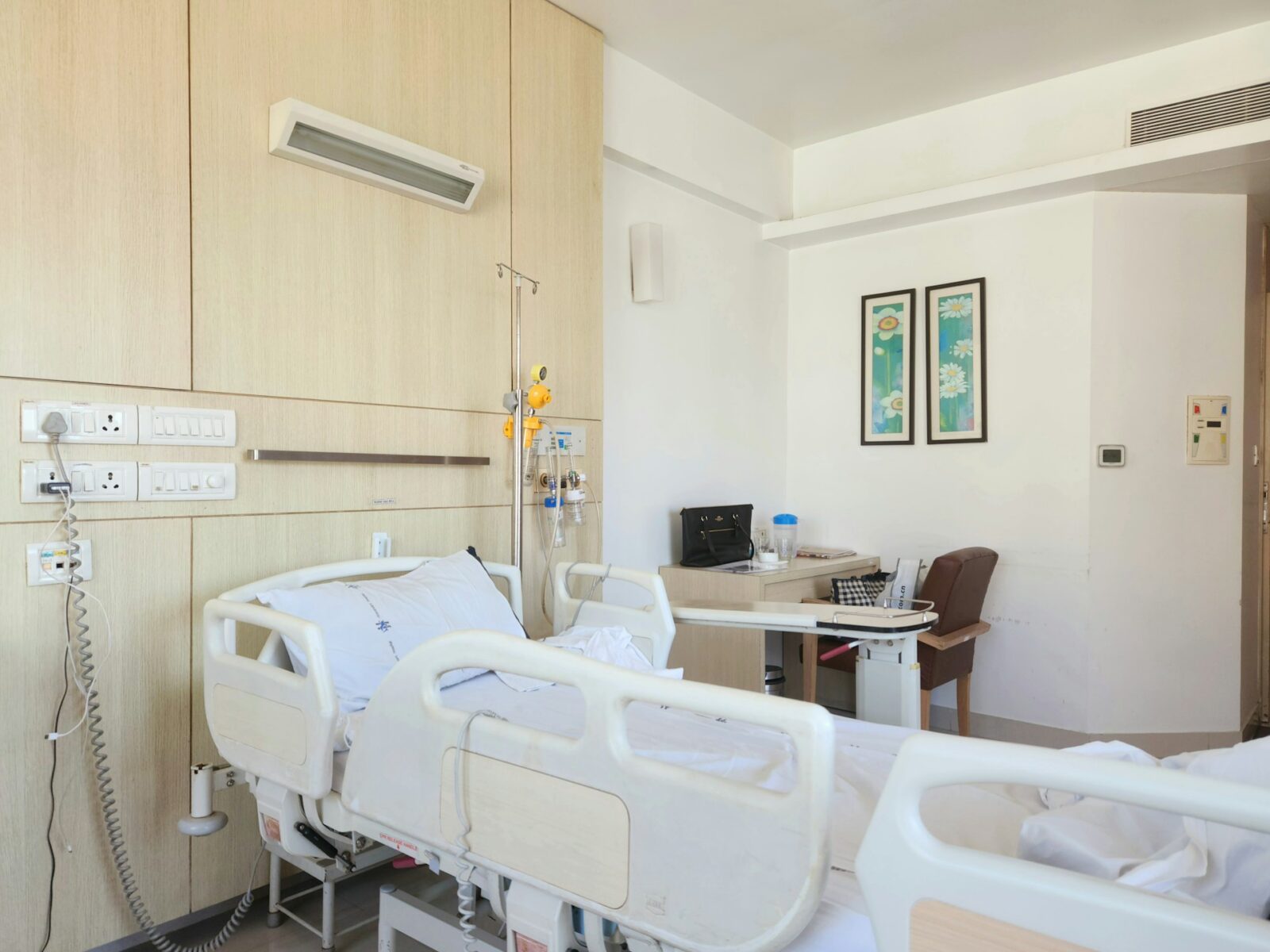

In a landmark ruling in March 2026, the Supreme Court of India in Harish Rana v Union of India permitted withdrawal of life-sustaining treatment from a man who had been in a permanent vegetative state for more than thirteen years. The Court held that clinically assisted nutrition and hydration (CANH) given by a feeding tube is medical treatment for the purposes of Article 21 of the Constitution and may lawfully be withdrawn when it no longer serves the patient’s best interests. This is the first time that the Supreme Court has itself permitted such withdrawal, shifting the emphasis from preservation of biological existence to protection of dignity and freedom from futile treatment.
The doctrinal path to Harish Rana
Indian courts have long guarded against conflating a right to die with dignity with a general right to die. In Gian Kaur v State of Punjab, a Constitution Bench upheld Sections 306 and 309 of the Indian Penal Code, holding that Article 21 does not encompass a general right to die, while leaving open a narrower question, that of a dignified death for the terminally ill. Parliament later softened this position through Section 115 of the Mental Healthcare Act 2017, decriminalising attempted suicide. Additionally, Justice KS Puttaswamy v Union of India located bodily autonomy within Article 21, clearing a path for a narrower right: not to hasten death, but to refuse futile treatment and die without needless suffering.
Indian courts have long been wary of equating the right to die with dignity with a broad right to die. In Gian Kaur v State of Punjab, a Constitution Bench upheld Sections 306 and 309 of the Indian Penal Code, holding that Article 21 does not include a general right to die, leaving open a narrower question, that of a dignified death for the terminally ill. Later, Parliament softened this stance through Section 115 of the Mental Healthcare Act 2017, decriminalizing attempted suicide, and Justice KS Puttaswamy v Union of India placed bodily autonomy within Article 21, leading to a narrower right: not to hasten death, but to refuse futile treatment and die without unnecessary suffering.
In Aruna Ramchandra Shanbaug v Union of India, the Court permitted passive euthanasia in principle but required High Court approval case by case. The 241st Report of the Law Commission of India then recommended legislation, which Parliament never enacted. A Constitution Bench went further in Common Cause v Union of India, holding that the right to die with dignity is intrinsic to Article 21, validating living wills and prescribing a two tier medical board procedure, later simplified in 2023. The right remained theoretical, presupposing a competent patient or an executed living will.
In Harish Rana, Rana suffered a traumatic brain injury after falling from the fourth floor of his accommodation in 2013 and developed quadriplegia and was in a permanent vegetative state sustained through a PEG tube for over a decade. His parents sought a medical board to consider passive euthanasia, but in 2024 the Delhi High Court rejected the plea, reasoning that withdrawal would amount to starvation since Rana was not on mechanical ventilation. Medical boards later found his condition irreversible and withdrawal in his best interests, leaving the Supreme Court to decide: is artificial food and water always basic care, or can it become futile treatment that may lawfully be withdrawn?
A landmark shift, still incomplete
The Supreme Court reversed the High Court, holding that CANH requires clinical judgment and ongoing management of complications, and is therefore medical treatment rather than basic nursing care, falling within the Common Cause framework, a distinction previously echoed by the English House of Lords in Airedale NHS Trust v Bland. It also clarified the best interests test: the inquiry cannot be confined to whether treatment can biologically prolong life, but must weigh prognosis, the burdens and benefits of treatment, and the patient’s dignity as a whole. Crucially, withdrawal does not mean withdrawal of care, and the Court directed Rana’s admission to palliative care at AIIMS under a supervised plan.
This tracks the World Health Organization’s view that palliative care is core to the right to health under Article 12 of the ICESCR. In India, that promise remains largely unmet: nearly 7-8 million people require palliative care, but less than 4% can access it, and coverage stays concentrated in states such as Kerala while much of central and eastern India has almost none. A right to a dignified death, without accessible palliative care, risks becoming a right in name only.
Harish Rana transforms this right from principle into an operational one, yet the architecture remains incomplete. India still has no dedicated statute governing end-of-life decisions, and withdrawal rests on judicial safeguards rather than legislation. Implementation remains uneven, with several states yet to constitute the required medical boards. Thus, the Court has urged the Parliament to legislate, echoing decades-old recommendations.
Health rights are understood as requiring the state to preserve life, but Harish Rana shows the harder dimension: dignity sometimes requires recognising when treatment should end. Ensuring withdrawal is accompanied by palliative care rather than abandonment, the Court has placed dignity at the centre of end-of-life medicine, an obligation that, once medicine can no longer cure, becomes one of ensuring life’s final stage is governed by care and dignity.


0 Comments