
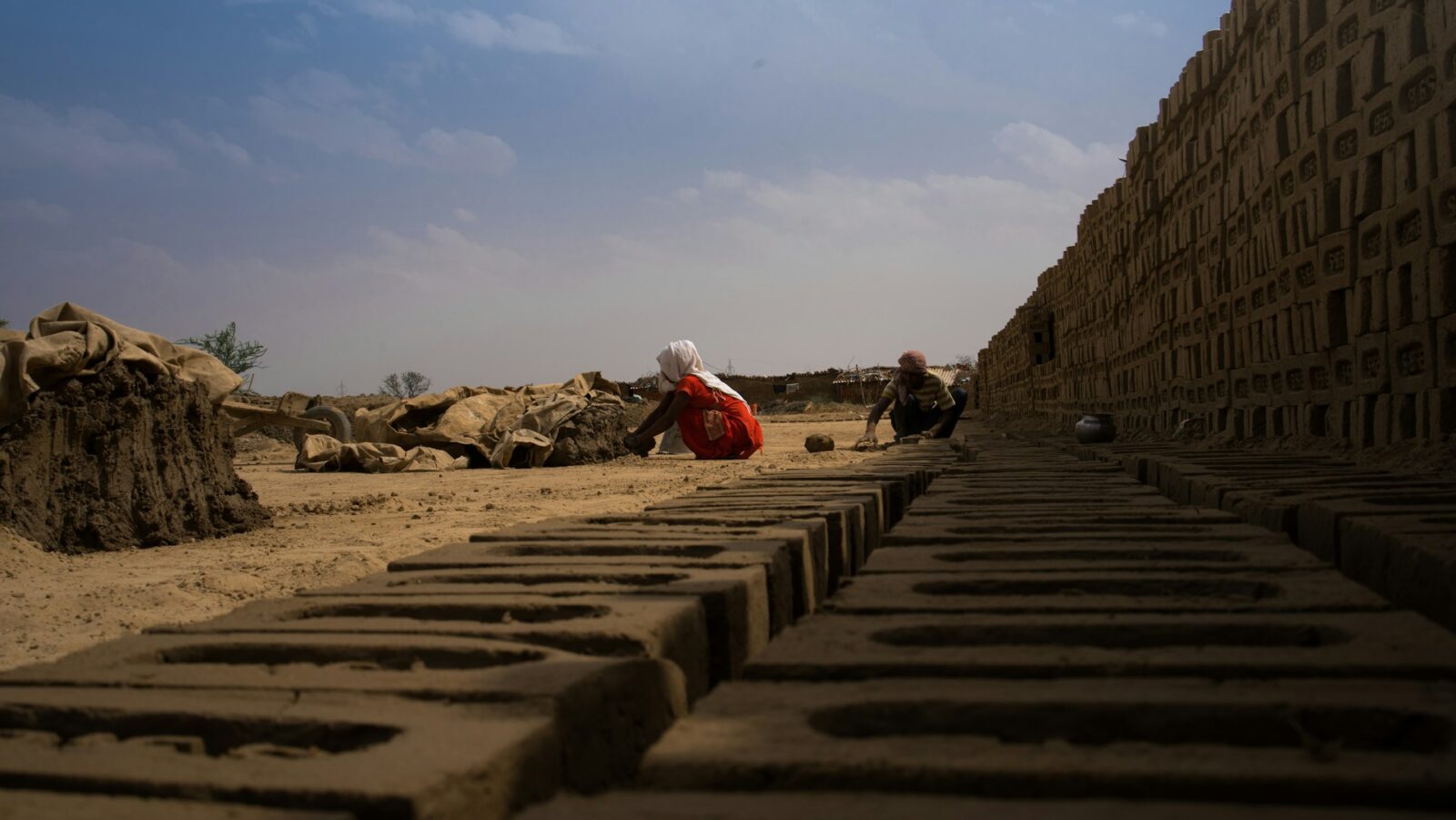

On July 9th, 2026, the National Human Rights Commission of India (NHRC) heard 86 cases of alleged bonded labour at brick kilns in Haryana. Justice V. Ramasubramanian, who serves as the chairperson of the NHRC, noted that most of these cases go unreported due to the misclassification of bonded labourers as normal labourers. This hearing forms part of a continuing pattern. In recent months, the NHRC has addressed multiple complaints of bonded labour, where migrant workers are trapped in a cycle of persistent debt, minimal wages and restricted freedom of movement. This cycle leads to further exploitation of the working class, where they are compelled by their circumstances to work in hazardous conditions to support their families.
Domestic Framework and International Commitments
India, being a signatory to ILO Conventions Nos. 29 and 105, is obligated to prohibit forced labour. This serves as the grundnorm for Article 23 of the Constitution, which prohibits all those practices that subjugate the vulnerable elements of society by prohibiting forced labour. Furthermore, the Bonded Labour System (Abolition) Act 1976 (“the 1976 Act”), supplemented by the NHRC 2021 Advisory and the updated version of the Standard Operating Procedure for Identification and Rescue of Bonded Labourers and Prosecuting of Offenders (2026), provides for economic support to the freed bonded labourers. The Apex Court has also emphasised the need for economic as well as social rehabilitation for marginalised workers (Bandhua Mukti Morcha v Union of India 1984).
Legislative Vacuum and Implementation Challenges
Despite the existence of a comprehensive legislative framework, implementation remains weak. The District-Level vigilance committees, statutorily mandated under the 1976 Act, remain non-functional. Surveys for identification remain sporadic due to budgetary limitations, and inter-state coordination for migrant workers is non-existent. Even when the labourers are “rescued”, they receive minimal monetary aid – limited interim assistance of Rs. 20,000 and inadequate long-term support. Despite explicit warnings in the NHRC Advisory 2.0 (2021), bureaucratic delays in issuing release certificates and linking full compensation to trial outcomes deprive survivors of timely rehabilitation, further pushing them back into the cycle of debt and bondage.
These domestic gaps are particularly concerning, considering India’s international commitments. Article 8 of the ICCPR and Article 6 of the ICESCR, both ratified by India, prohibit forced labour; however, the misclassification of bonded labourers as voluntary workers, as noted in the recent NHRC hearing, prevents the invocation of the legislative provisions.
Way Forward: Strengthening Implementation and Accountability
Firstly, the district authorities, in coordination with the Central and State Governments, should institutionalise regular vigilance over high-risk industries through an audit supported by a public reporting mechanism to ensure accountability and transparency. Secondly, the development of inter-state coordination mechanisms would help track migrant workers and ensure rehabilitation without any constraints, thereby smoothing the entire process. Thirdly, rehabilitation schemes need to shift from economic reimbursement to skill development to stop the ongoing cycle of worker exploitation in the name of circumstances.
Fourthly, NHRC needs to focus on developing capacity-building programmes for police administration and labour officials to address the misclassification of bonded labourers and improve rescue operations. Finally, as India serves as a member of the UN Human Rights Commission (2026-2028), domestic reforms must prioritise the effective eradication of bonded labour. Significant progress in fulfilling international commitments under Article 8 of the ICCPR, Article 6 of the ICESCR and the ILO Conventions will enhance India’s international credibility and affirm its commitment towards the global prohibition of forced labour as a fundamental human right.


0 Comments