
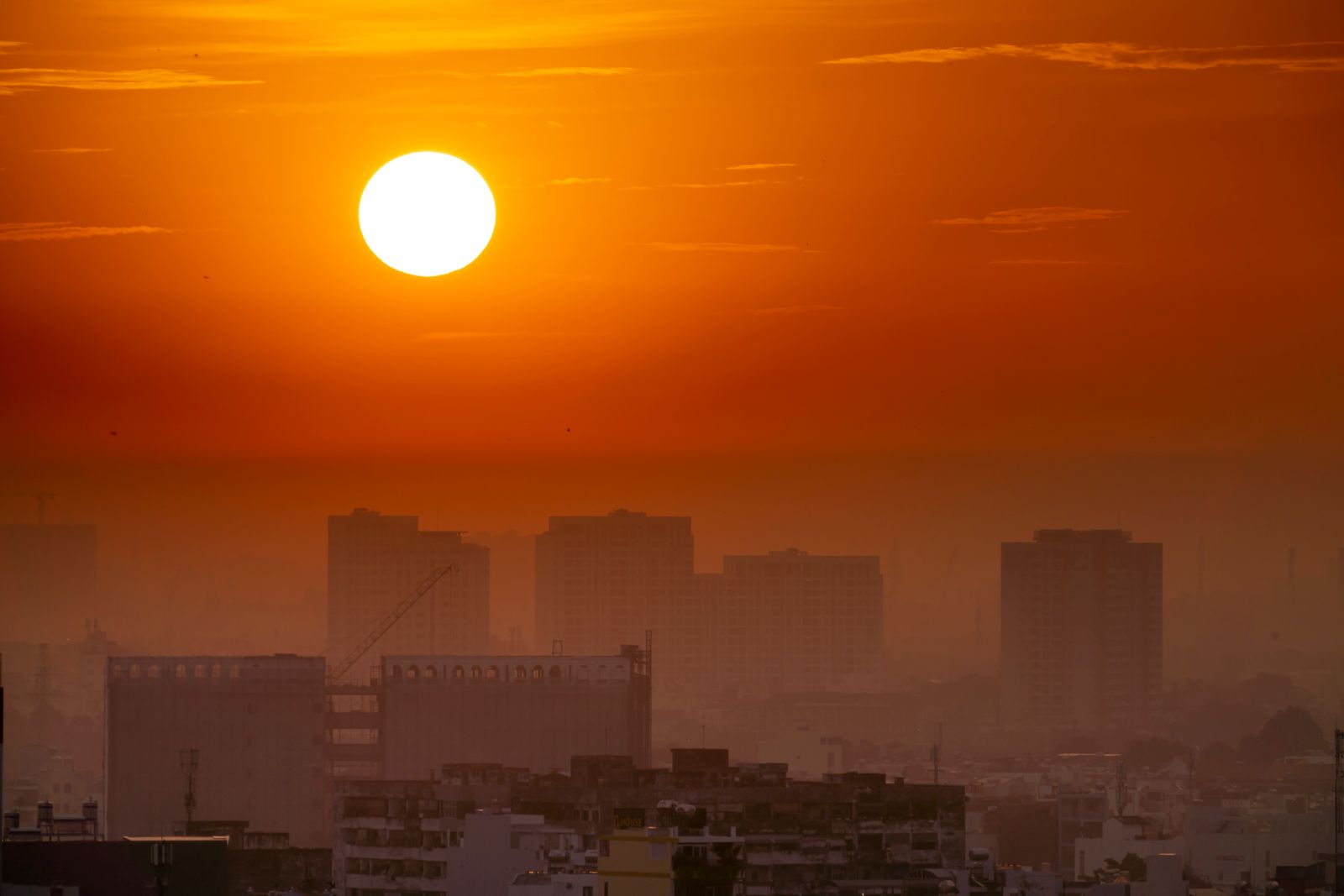

When Delhi’s India Meteorological Department yellow alert ran through 24 May 2026 with Safdarjung crossing 43.4°C, the constitutional question the heatwave forced into view was no longer whether climate change implicates fundamental rights, but whether the right the Supreme Court of India has read into Article 21 can deliver enforceable protection to the workers most at risk. Two years after MK Ranjitsinh v Union of India (2024) declared a “right to be free from the adverse effects of climate change” rooted in Articles 14 and 21, India’s heatwave governance still treats heat protection as advisory rather than as a positive obligation under the right to life.
The doctrinal foundation, and its present limits
Ranjitsinh anchored the climate right in the Constitution but did so in an unlikely vehicle: a case about overhead transmission lines threatening the Great Indian Bustard. The bench was thus invited to balance biodiversity against renewable energy, and the climate right was articulated in dicta rather than as the ratio decidendi. As Dubash and Ghosh have noted in The Hindu, the judgment opens doors for litigation but leaves “unresolved questions” about who can claim the right, against whom, and how it is to be operationalised. The 2025 commentary in the Health and Human Rights Journal places the ruling within a global movement, alongside the Dutch Supreme Court’s Urgenda decision and the European Court of Human Rights’ 2024 judgment in Verein KlimaSeniorinnen Schweiz v. Switzerland.
The KlimaSeniorinnen judgment is doctrinally important for Indian jurisprudence because it identifies a precise State obligation: a Convention State must adopt and effectively apply regulations and measures capable of mitigating the existing and potentially irreversible future effects of climate change. The Strasbourg court grounded the duty in Article 8 of the European Convention. The Indian climate right, anchored in Articles 21 and 14, has the doctrinal architecture to absorb the same standard of effectiveness.
The legislative vacuum at the point of greatest vulnerability
The protection gap is sharpest for the 400 to 490 million informal workers in construction, sanitation, street vending, delivery and brick-kiln work who carry the heat burden disproportionately. The Factories Act 1948 governs only indoor workplaces. Section 23 of the Occupational Safety, Health and Working Conditions Code 2020 empowers the Government to prescribe safety standards but does not make them mandatory, and heat is not yet a notified hazard. Heatwaves are not on the central list of notified disasters under the Disaster Management Act 2005, which restricts fiscal response to the discretionary 10 percent SDRF window.
On 23 July 2025, the Supreme Court of India issued notice on a writ seeking comprehensive measures to protect unorganised-sector workers from heatwave deaths. The petition is the natural vehicle for translating Ranjitsinh from declaration into enforceable standard.
Three doctrinal moves the Court can make
First, the climate right should be construed to require a positive State duty of effectiveness, on the KlimaSeniorinnen model. Compliance should be measurable against deaths averted and hospital admissions reduced, not against the existence of advisories.
Second, the right read with Article 14 mandates that informal and gig workers be brought within statutory occupational-safety coverage. The Supreme Court has the constitutional authority, in Consumer Education and Research Center v. Union of India (1995), to read workplace health protection into Article 21.
Third, heatwaves must be notified as a Schedule-listed disaster. Without that classification, the fiscal architecture cannot match the constitutional declaration.
Beyond the Indian frame
The migration of climate rights from Strasbourg to Karlsruhe to New Delhi reveals a convergent constitutional grammar: the State is now answerable not only for what it emits but for the conditions in which the most exposed must live and work. India’s contribution to that grammar, post-Ranjitsinh, will be measured not by what the Constitution says but by whether the woman selling vegetables at 43.4°C can invoke it.


0 Comments