

One year ago, the International Court of Justice warned, in its Advisory Opinion on the Obligations of States in respect of Climate Change, that the rights of women and of Indigenous and traditional communities are especially exposed to violation, and called on States to design adaptation measures without discriminating against them. What the Court did not explain is what that protection looks like in practice.
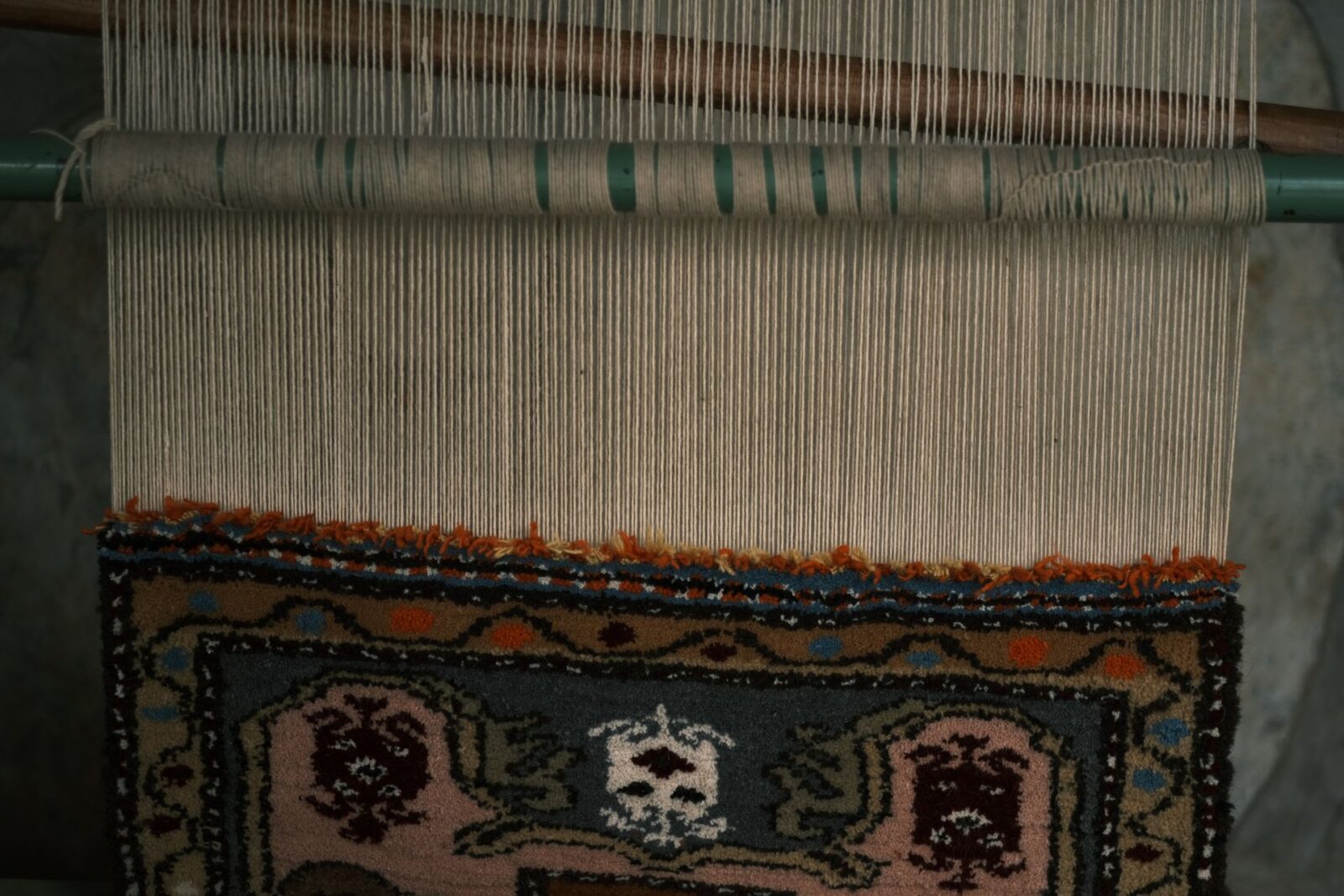
The answer can be found inside a black tent in Iran’s Zagros Mountains, where a Qashqai woman sits at a horizontal loom, weaving without a written pattern, a digital template, or a printed design. What guides her hands is memory: a way of translating landscape, season, kinship, and lived survival into thread. The finished rug matters, but the practice of weaving matters more — a form of knowledge, a way of life, a cultural process passed from one generation to the next.
The precise content of that protection lies in the framework of cultural rights. Article 15(1)(a) of the ICESCR recognizes the right of everyone to take part in cultural life, and General Comment No. 21 defines cultural life broadly, encompassing ways of life, language, oral traditions, and customs. What the Court only gestured toward — the rights of Indigenous and traditional communities — thus acquires concrete content: international human rights law protects these rights only by treating culture as a living practice, not a fixed object.
For Iranian nomadic women, especially Qashqai weavers, cultural life runs through the body, oral narrative, seasonal movement, and the ecological conditions that make nomadic life possible. So when forced displacement, sedentarization, drought, or conflict disrupt those conditions, the resulting harm is not merely economic. It is the very violation the Court warned against, without ever mapping out what it looks like.
This concern can be traced precisely in the text of the Advisory Opinion itself. In the section addressing women, children, and Indigenous peoples [382], the Court found these groups may be harmed by the climate crisis in specific, disproportionate ways. In a separate opinion, Judge Hilary Charlesworth extended this intersectionally, stressing States’ duty to address the discriminatory effects of climate measures on vulnerable groups. Yet research from the UN University Centre for Policy Research shows the Opinion offers no complete framework for Indigenous and land-based communities’ rights — a gap that sits precisely where Qashqai women’s lives are shaped.
In practice, this gap means the prevailing legal framework still centers the object rather than the process. If a rug is seen only as a cultural product, the law sees the artefact but not the knowledge system behind it. For Qashqai women, weaving depends on mobility, oral transmission, access to pasture, natural dyes, local materials, and continuous learning across generations. Weaving, seen this way, is not simply a craft; it is a cultural ecology, one with no explicit place in the Court’s opinion or in traditional heritage frameworks.
Moreover, to this climate pressure must be added a threat absent from the Advisory Opinion itself: war. Since strikes resumed across southern Iran in 2026, Fars province — the Qashqai’s historic winter range and market hub — has repeatedly come under attack, including around Shiraz and along the Shiraz–Bandar Abbas corridor nomadic households have long used between pasture and market. Such conflict does not only endanger lives; it severs the physical routes through which cultural knowledge travels. Drought and war differ in origin but converge in effect: both sever migration routes, and with them, what is lost is not only livelihood but a cultural system whose survival depends on movement itself.
One year after the Advisory Opinion, the question the Court left unanswered still stands: can human rights law recognize cultural life when it is mobile, domestic, gendered, and invisible to monument-based frameworks? The Qashqai loom, for this reason, becomes a legal test. If the answer is yes, the way forward is concrete, not aspirational: the CESCR should extend General Comment No. 21 to state explicitly that mobile, intangible practices are protected on the same terms as monuments, and States implementing the Advisory Opinion must consult nomadic and pastoral communities before any adaptation measure touches their land or their routes. Anything less means the law keeps protecting the rug while letting the loom fall silent. The goal is not only to preserve a craft, but to recognize that cultural continuity is itself a human right. For Iran’s nomadic women, that right is woven, every day, into the work of the loom.


0 Comments